A new shingle roof is more than a layer of shingles nailed over an old roof. Shingle roofing installation involves inspecting the existing roof, preparing the roof deck, installing weather-protection layers, placing shingles correctly, and properly sealing vulnerable areas such as valleys and roof penetrations. The quality of each step affects how well your roof handles rain, snow, wind, and seasonal temperature changes.
If you’re considering a new roof, knowing what happens beneath and around the shingles can help you compare estimates and spot shortcuts before work begins. Here is what homeowners should know before approving a shingle roofing project.
What Is Shingle Roofing Installation?
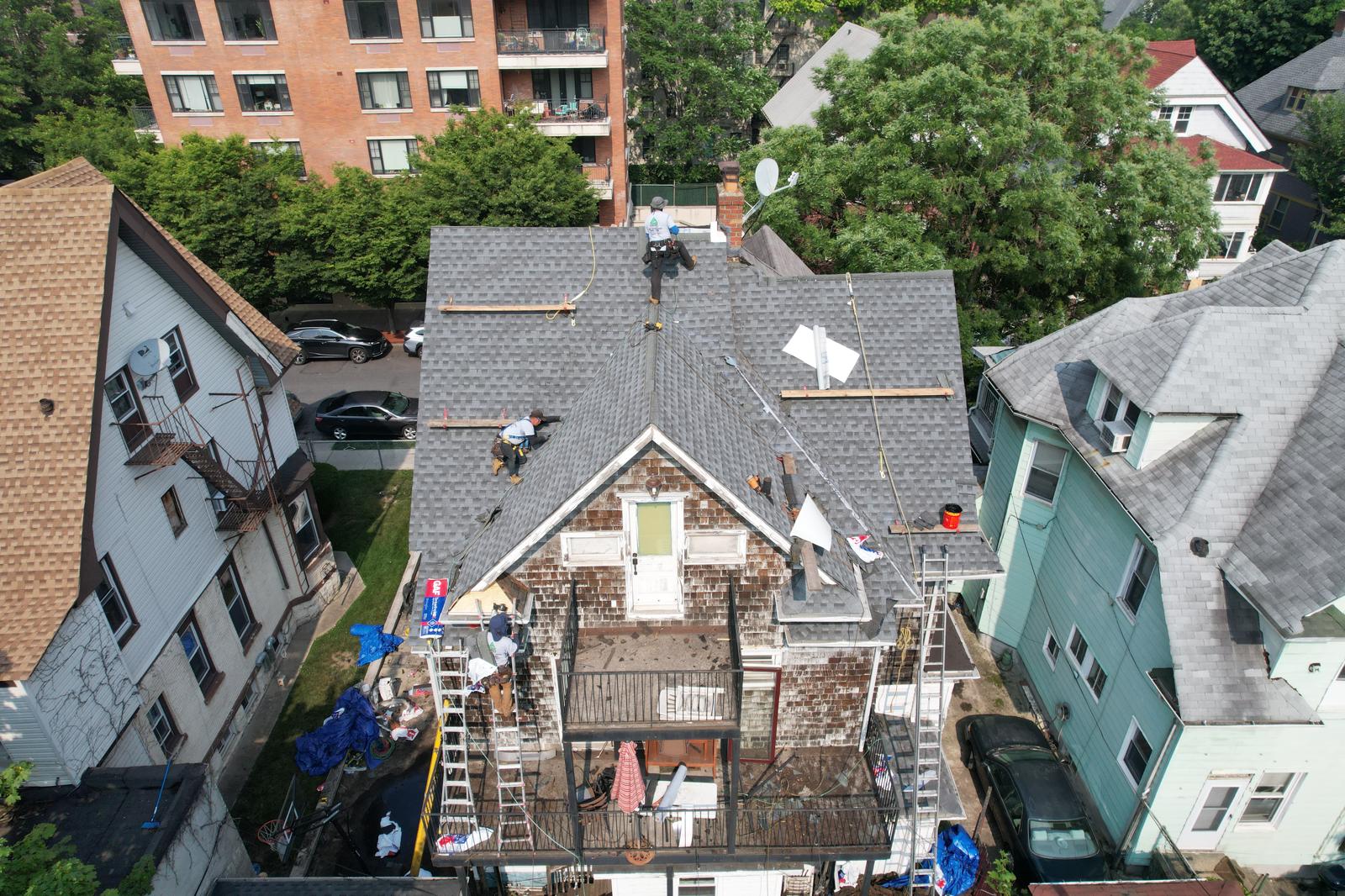
Shingle roofing installation is the process of preparing the roof deck and installing underlayment, flashing, shingles, and other protective components to create a complete roofing system. A professional installation process begins with inspecting the existing roof for damage, checking the deck and flashing, and determining whether old roofing needs to be removed.

The shingles are then installed from the roof edges upward, with careful attention to fastening, alignment, valleys, flashing, and ridge areas. These details help prevent water intrusion and ensure the roof performs as intended.
Types of Roof Shingles Homeowners Can Choose From
Homeowners can choose from several shingle types, with asphalt and architectural shingles being common residential roofing options. Compare them based on cost, appearance, durability, warranty, and your roof’s requirements.
Asphalt Shingles
Asphalt shingles are a popular residential option because they offer a balance of cost, appearance, and weather protection. Check the product’s warranty, wind rating, and installation requirements before choosing.
Architectural Shingles
Architectural shingles are dimensional asphalt shingles that provide a more textured appearance than basic shingles. Compare individual products because performance, warranties, and installation requirements can vary.
Other Shingle Options
Wood, composite, and specialty shingles provide additional design and performance choices. They may require different installation methods and maintenance, so consider your budget, roof design, and local requirements.
When Should You Replace or Install a New Shingle Roof?
A full shingle roof replacement is usually worth considering when the roof has widespread deterioration, recurring leaks, damaged decking, or shingles that are approaching the end of their useful service life. A few isolated damaged shingles, however, may only require repair.
Look for warning signs such as:
- Missing, cracked, curling, or badly damaged roof shingles
- Recurring leaks or water stains
- Widespread loss of protective granules
- Sagging areas of the roof
- Damaged flashing around chimneys, vents, or other penetrations
- Extensive deterioration across multiple roof sections
Age alone should not determine the decision. A professional inspection can reveal whether the roofing system still has serviceable components or whether continuing to repair it is becoming less practical.
Repair vs. Full Shingle Roof Replacement
A repair makes sense when damage is limited, and the surrounding roofing remains in good condition. Replacement becomes more reasonable when problems are widespread or when repairing one area is unlikely to address the underlying condition of the roof.
Ask the contractor to explain why replacement is recommended and whether the roof deck, flashing, ventilation, and underlayment also need attention. A detailed explanation is more useful than an estimate that only lists the number of shingle bundles.
Preparing the Roof for Shingle Installation
Proper preparation helps ensure the new shingle has a sound, weather-resistant surface. The contractor should address the condition of the existing roofing system before roof shingles installation.
Inspecting the Existing Roof
The contractor should assess the shingles, flashing, roof penetrations, valleys, ventilation, and visible condition of the decking. The inspection helps determine whether a repair, replacement, or additional preparation is necessary.
Removing the Old Roof
When the existing roofing is removed, the contractor can inspect the underlying deck instead of covering potential problems. Damaged or deteriorated decking may need to be repaired or replaced before new roofing is installed.
Inspecting and Preparing the Roof Deck
The roof deck provides the structural surface beneath the roofing materials. It needs to be sufficiently sound and properly prepared before the next layers are installed.
This step is especially valuable because damage that was hidden beneath the old shingles becomes visible during tear-off.
Installing Underlayment and Ice/Water Protection
Underlayment provides an additional layer of protection beneath the shingles. Ice and water protection may be required or recommended in vulnerable areas such as eaves and valleys, depending on the roof design, local requirements, and manufacturer’s instructions.
Shingle Roofing Installation: Step-by-Step Process
A typical roof shingle installation process starts from the roof edges upward, with each layer positioned to direct water away from the roof deck. The exact sequence, fastening pattern, overlaps, and protective materials vary by roof design, product, slope, local code, and manufacturer instructions.
1. Install the Drip Edge
Metal drip edge is installed along the appropriate edge of the roof to help control water runoff and protect the roof edge. Its placement relative to the underlayment can vary by location and installation system.
2. Install Underlayment
Underlayment is installed over the prepared roof deck in accordance with the roofing contractor’s requirements and applicable code. It provides another protective layer beneath the shingles.
3. Install Starter Shingles
Starter shingles are placed along the roof’s starting edge. They create the foundation for the first visible course and help protect the roof edge.
4. Install the First Course of Shingles
The first visible row is aligned carefully because mistakes here can affect the appearance and positioning of subsequent courses. Shingles are fastened according to the manufacturer’s specified location and pattern of roofing nails.
5. Install Subsequent Shingle Courses
Each succeeding course is installed with the required exposure and offset pattern. Proper alignment helps create consistent coverage and ensures that water flows across the overlapping shingles rather than into the roofing system.
6. Install Flashing Around Roof Penetrations
Flashing is used around areas where the roof meets structures or penetrations, such as chimneys, walls, vents, and certain roof features. These transitions require careful detailing because they interrupt the continuous shingle surface.
7. Install Ridge Shingles and Ridge Cap Shingles
The ridge is finished with appropriate ridge shingles or ridge-cap products. If the roof uses ridge ventilation, the ridge system must also be installed as part of the overall ventilation design.
8. Complete the Final Roof Inspection
The finished roof should be checked for visible installation problems, exposed or improperly positioned fasteners, damaged shingles, flashing issues, debris, and incomplete details. A final walkthrough also gives the homeowner an opportunity to ask about maintenance and warranty requirements.
What Makes a Proper Shingle Installation?
A proper installation is one that follows the selected shingle manufacturer’s instructions, applicable building codes, and the requirements of the specific roof design. The finished roof should have correctly installed shingles, underlayment, flashing, edge protection, and other required components, not simply a neat-looking shingle surface.
Before hiring a contractor, ask:
- Which shingle product will be installed?
- Will the existing shingles be removed?
- How will damaged roof decking be handled?
- What underlayment and ice/water protection will be used?
- How will valleys and roof penetrations be flashed?
- What ventilation work is included?
- Who handles permits and inspections where required?
- What workmanship warranty is provided?
- What does the manufacturer’s shingle warranty require?
These questions can reveal differences between two estimates that initially appear similar.
How to Maintain a Newly Installed Shingle Roof
Regular maintenance helps prevent small roofing problems from becoming costly repairs.
- Keep gutters and drainage areas clear.
- Check for damaged or missing shingles after storms.
- Inspect flashing and roof edges periodically.
- Avoid walking on the roof unless properly equipped.
- Keep your installation and warranty records for future reference.
Get Professional Help With Your Shingle Roofing Project
A shingle roof should protect your home for years, so the installation deserves more attention than simply choosing a color and accepting the lowest estimate. The roof deck, underlayment, flashing, ventilation, shingles, and finishing details all work together.
Smart Roofers NY provides professional shingle roofing services to help homeowners install a properly planned and professionally installed roofing system. If your roof is damaged, aging, or ready for replacement, get professional shingle roofing services at Smart Roofers NY and discuss the right approach for your home.
Frequently Asked Questions
What is the average cost to install a shingle roof?
There is no reliable single price for every home. The total cost depends on roof size, roof complexity, shingle product, tear-off requirements, roof-deck repairs, flashing, ventilation, labor, disposal, and local conditions. Get a detailed estimate that separates these components rather than comparing only the total price.
What is the correct way to install roof shingles?
The correct method depends on the specific shingle product, roof design, slope, local code, and manufacturer’s instructions. In general, installation involves preparing the deck, installing required edge protection and underlayment, applying starter shingles and field shingles with the specified fastening pattern, and properly detailing valleys, penetrations, and ridges.
What are the instructions for installing asphalt shingles?
Asphalt roofing shingle instructions are product-specific. The manufacturer typically specifies requirements for roof slope, underlayment, fasteners, nail placement, exposure, starter courses, flashing, and ridge products.
Do shingles go directly on plywood?
Shingles are generally not installed directly onto bare plywood or other roof decking. A roofing system normally includes additional components, such as underlayment and edge and flashing details, between the deck and the shingles. The exact assembly depends on the roof design, code, and manufacturer’s requirements.
Can I estimate shingles myself?
You can make a rough material estimate by measuring the roof’s areas and accounting for waste, but roof geometry can make the calculation more complicated than it appears. Valleys, hips, ridges, dormers, penetrations, and the selected shingle’s coverage all affect material quantities. A professional estimate is more reliable for ordering materials and calculating the complete project cost.
How long does shingle roofing installation take?
The timeframe varies with roof size, complexity, weather, tear-off requirements, decking repairs, crew size, and material availability. A simple roof may require substantially less time than a large or complicated roof with extensive preparation work.
Should old shingles always be removed before installing new ones?
Not necessarily in every situation, because some roofing systems and local requirements may allow specific overlay applications. However, removing the existing roof can allow the contractor to inspect the deck and address concealed damage. The decision should be based on the roof’s condition, product requirements, code, and the contractor’s assessment.


 Call Now